
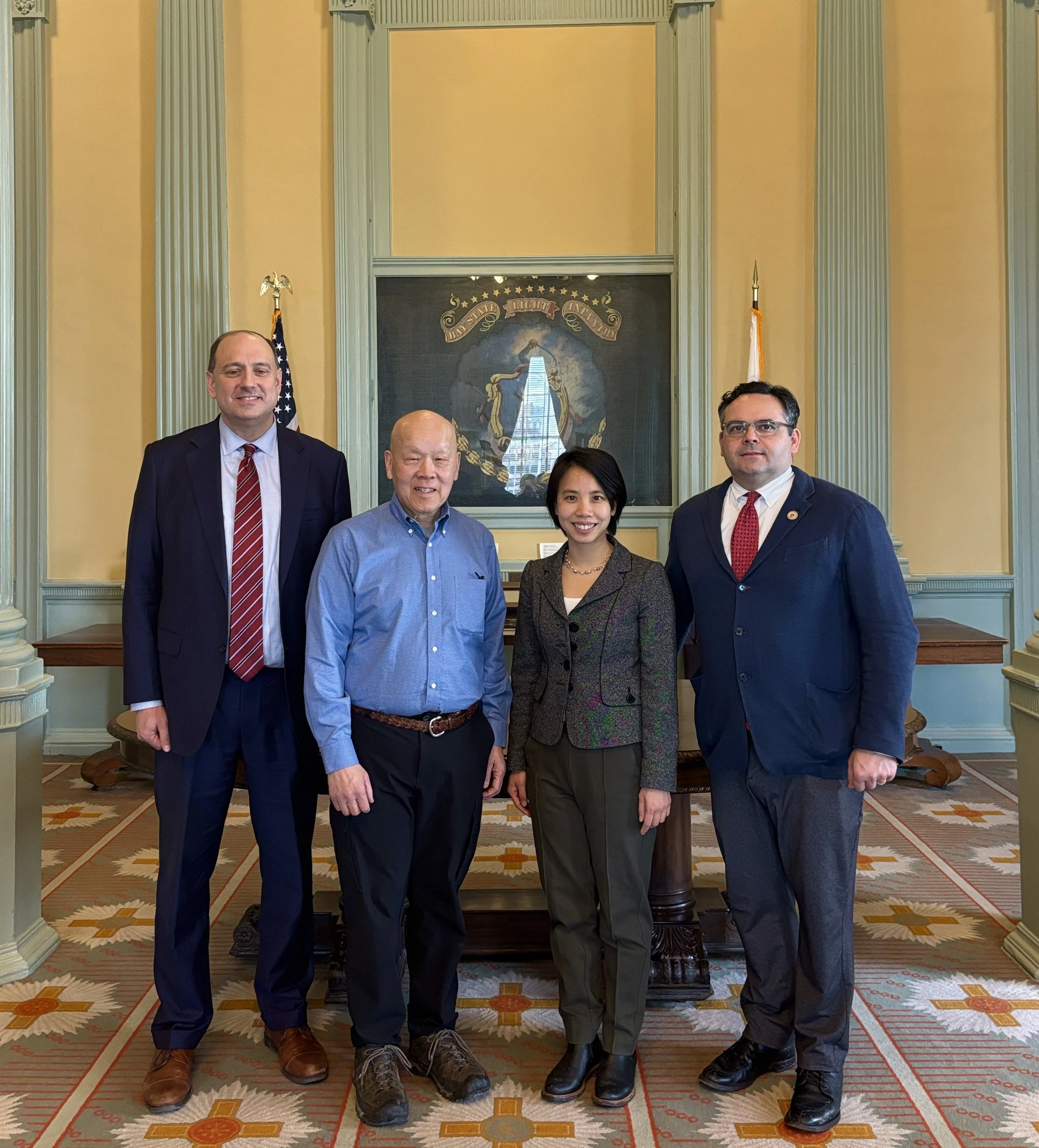
Given the growing Asian American population in the Middlesex and Worcester district that I represent, and building on my close partnership with Asian American civil rights, civic and advocacy organizations in passing the Data Equity Act last session, I was extremely proud to have been asked to file An Act Designating January 30 of each year as Fred Korematsu Day of Civil Liberties and the Constitution in Massachusetts this session, alongside Representative Erika Uyterhoeven. I want to express my gratitude to the gentleman from South Boston, the Senate Chair of the Joint Committee on State Administration and Regulatory Oversight, for holding an early hearing on this bill, and reporting it out favorably to the Senate.
This legislation honors a man whose courage and conviction represents one of the most profound moral stands in American history. I am deeply grateful to the Fred T. Korematsu Institute, the Asian Community Fund at the Boston Foundation, the Asian Caucus, the Asian American and Pacific Islanders Commission, who prompted the filing of this bill. Their advocacy reflects a commitment not only to remembrance, but to education, accountability, and justice. I am proud to partner with them and Representative Uyterhoeven on this effort.
Fred’s story and struggle speak to one of the darkest chapters in twentieth-century American history. Fred Korematsu was born in Oakland, California on January 30th, 1919, the third of four sons to Japanese immigrant parents who ran a floral nursery business in Oakland. After the United States entered World World War II on December 11th, 1941, after the attack on Pearl Harbor, Korematsu tried to enlist in the U.S. National Guard and U.S. Coast Guard, but was turned away by military officers who discriminated against him due to his Japanese ancestry. On February 19th, 1942, President Franklin Roosevelt signed Executive Order 9066, authorizing the U.S. military to people of Japanese descent, the majority of whom were American citizens.
Among those Japanese Americans was Fred Korematsu, who was ordered transferred with his family to an internment camp in Topaz, Utah. Korematsu had the incredible courage to defy the order, refusing to be interned. Arrested on a street corner in San Leandro, California, Korematsu agreed to be the test case to challenge the constitutionality of the government’s imprisonment of Japanese Americans. On September 8, 1942, Korematsu was convicted in federal court for violating the military orders under Executive Order 9066, and transferred to that Utah internment camp.
Here is Mr. Korematsu’s explanation for his resistance –
“Things were going so fast, and I was so young… Looking back, I felt [the removal] was wrong because any person who did wrong, a criminal, would get a fair trial or get a hearing to prove that they’re guilty. But to be pushed into evacuation, threatened with punishment, because you look like the enemy is wrong… I felt that I was an American citizen and I had as much rights as anyone else. I don’t even have ties with Japan nor have I ever been there. To be accused like this, I just thought it wasn’t fair. It was wrong.”
Although his legal challenge to detention was rejected, it made it to the Supreme Court. The Executive Order was upheld in one of the most infamous cases in the Court’s entire history. With only a single justice dissenting, the Court wrote that Japanese ancestry was a “menace to the national defense” that could not be dealt with individually.
This disturbing ruling dehumanized Japanese Americans. Mr. Korematsu’s bravery was a defense of his own humanity and American ideals. His story is one that must be taught, retaught and retaught again. This bill is only the start of that worthy endeavor. Designating a Fred Korematsu Day ensures that his story is carried forward. It creates space for education, reflection, and dialogue, especially for young people learning the importance of defending constitutional rights under difficult circumstances.
Because of his bravery, his legacy has grown into a nationwide movement inspiring the creation of the Fred T. Korematsu Institute, which now leads education, advocacy, and civic engagement efforts across the country.Their leadership, alongside Dr. Karen Korematsu, who is Fred’s daughter and community advocates ensure this bill is not merely symbolic, but impactful. Fred Korematsu’s story speaks not only to Japanese Americans, but to all communities whose rights have at times been questioned, limited, or denied.
By passing this bill, Massachusetts affirms that we do not look away from our history. We learn from it.